Just How Court Reporting Works: A Step-by-Step Guide to the Legal Process
Court reporting is a crucial part of the lawful system. It involves an organized process that ensures accurate documents of procedures. From prep work to the final shipment of transcripts, each action is important. Recognizing how court press reporters operate offers insight into the stability of lawful records. The nuances of their work can profoundly affect lawful results, triggering questions concerning the modern technologies and techniques they utilize. What are the details strategies that define this profession?
The Function of Court Reporters in the Legal System
Stenotype reporter play a vital function in the legal system by giving precise and reliable transcripts of court process. Their work guarantees that every talked word during hearings, tests, and depositions is recorded, which is crucial for keeping an official document of occasions. This transcription is essential for allures, as it allows greater courts to examine the process and establish if any kind of errors were made during the test.
Furthermore, court press reporters assist in preserving the integrity of the lawful process by creating verbatim records that can be referred to by legal representatives, courts, and other celebrations associated with a case. They often make use of specialized equipment and software to capture discussion with accuracy. Beyond the court room, their records can act as crucial historic documents, using understanding right into judicial procedures and the lawful system's performance. Inevitably, court press reporters contribute substantially to transparency and liability in lawful issues.
Getting ready for a Court Reporting Session
Prep work is important for a successful court reporting session, as it ensures the precision and efficiency of the transcription procedure. Court press reporters start by reviewing situation materials, consisting of pleadings and witness lists, to familiarize themselves with the terminology and context. They also make certain that they have the necessary devices, such as steno devices, notebooks, and back-up devices, on-line.
Before the session, interaction with lawful groups is essential. Press reporters usually make clear any kind of details requests regarding format or preferred terminology. Furthermore, they might set up to meet witnesses or attorneys to discuss the proceedings and validate the schedule. Arriving very early to set up the tools permits for fixing potential technical problems. Overall, thorough prep work not only enhances the press reporter's self-confidence yet additionally contributes significantly to producing a precise and clear record of the legal procedures.

Capturing the Document: Methods and Devices
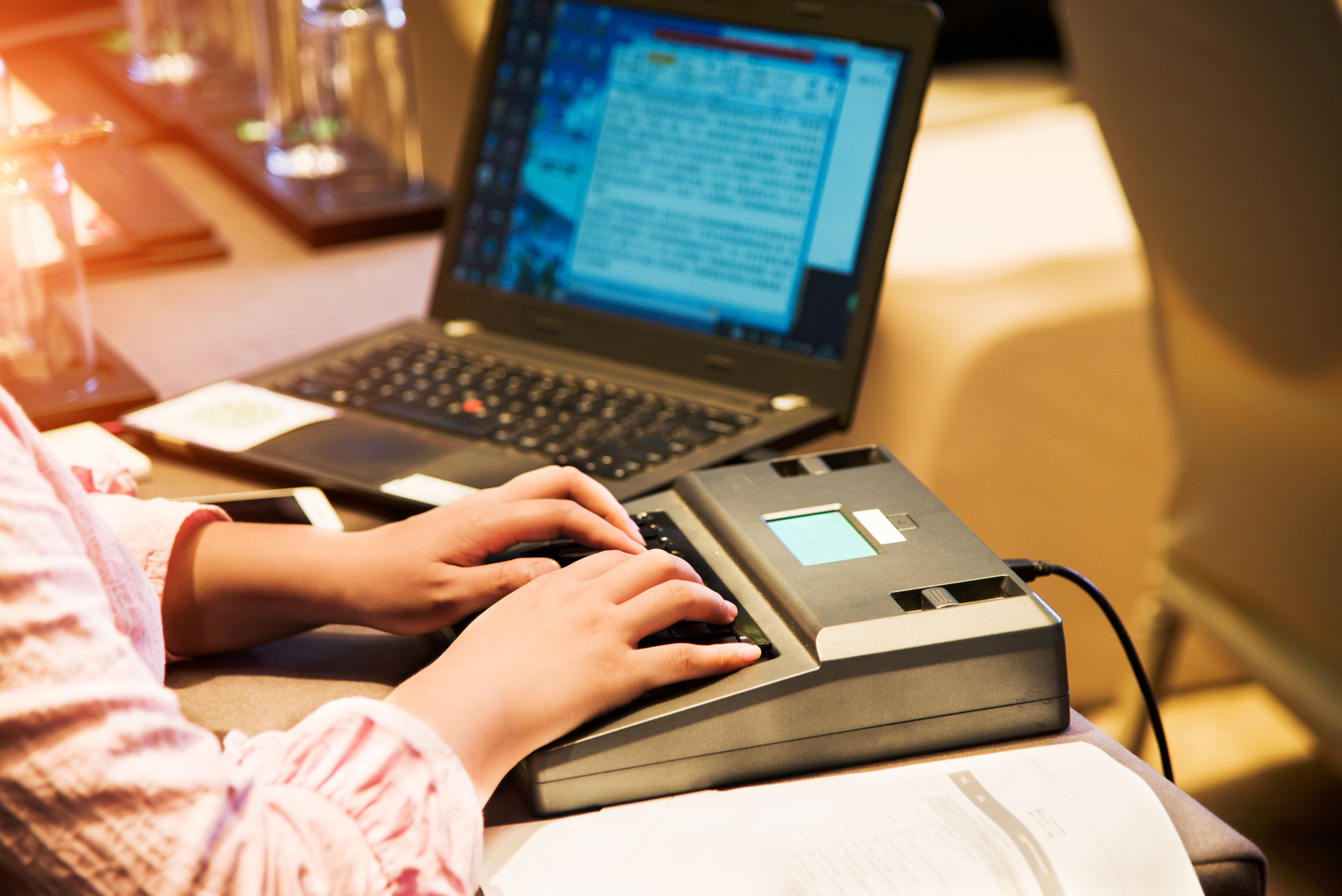
Utilizing innovative techniques and dependable tools, stenotype reporter diligently record the talked word throughout lawful procedures. They utilize stenography, an approach including a specialized maker that allows them to kind numerous sounds simultaneously, consequently transcribing dialogue in actual time. This maker, recognized as a steno keyboard, is furnished with keys that represent words and syllables, allowing swift and precise input.
Along with stenography, court reporters may utilize audio recording gadgets as extra tools. These devices function as backups, ensuring that no essential info is shed during procedures. Furthermore, some reporters include software that enhances their transcription effectiveness, using features such as voice acknowledgment and automated format.
Proper positioning and focus are paramount; press reporters need to keep focus on all audio speakers, recording nuances and inflections that add to the record. Via a mix of ability and modern technology, court reporters maintain the integrity of the legal procedure by making sure a complete and exact document of events.
Recording the Procedures
Recording the procedures calls for court reporters to convert talked discussion right into written message with exceptional precision and speed. This process commonly occurs quickly after the recording has actually been recorded, using specialized software application that enables seamless transcription. Stenotype reporter have to listen diligently to the audio, making sure that every inflection, pause, and word is properly represented in the records.
They often rely on shorthand systems, individual transcription skills, and advanced modern technology to facilitate this task. The atmosphere in which they work can be often chaotic and busy, as lawful proceedings commonly include multiple audio speakers and technical jargon. Court reporters should also keep focus to capture nuances in tone and context that may be necessary for the lawful document. Inevitably, the precision of the transcription is essential, as it offers as a certification for future referral in lawful proceedings.
Reviewing and Modifying the Transcript
The process of evaluating and editing and enhancing the records is crucial for making sure accuracy in court reporting. Court press reporters frequently work together with attorneys to clear up any kind of obscurities and validate the accuracy of the videotaped statements. This partnership is essential for keeping the honesty of the legal record.
Significance of Precision
Accuracy serves as the cornerstone of efficient court reporting, as also small mistakes can significantly change the definition of legal process. The assessing and editing and enhancing procedure is vital in making certain that transcripts mirror the talked word with fidelity. Stenotype reporter thoroughly confirm names, technological terms, and legal lingo to keep precision. This focus to information helps avoid misunderstandings that might affect situation outcomes. Additionally, precision promotes count on amongst lawful experts, clients, and the court, strengthening the stability of the judicial system. Mistakes can cause allures or disagreements, making it imperative for press reporters to fine-tune their work completely. Inevitably, the quest of accuracy not only enhances the integrity of the transcript however likewise upholds the requirements of the legal profession.
Cooperation With Attorneys
Collaboration between court reporters and lawyers is essential during the evaluating and editing and enhancing stage of records manufacturing. This process assures that the last record properly reflects read the full info here the spoken word and complies with legal standards. Lawyers commonly evaluate records for certain terminology, context, and any prospective mistakes that can affect the case. Stenotype reporter depend on lawyers' knowledge to clarify ambiguous sections or highlight vital declarations. Efficient interaction is essential; attorneys may supply responses or request improvements, which court reporters have to address immediately. This partnership not just enhances the quality of the records yet also adds to a smoother legal process. Ultimately, collective efforts lead to a reliable and exact document, vital for future recommendations and legal process.
Providing the Last Records to Customers
Upon conclusion of the transcription process, court press reporters diligently prepare the last document for delivery to their customers. This final transcript goes through detailed proofreading to ensure accuracy, as any type of errors could considerably influence legal procedures. Stenotype reporter layout the file according to the certain needs get redirected here stated by the customers or legal firms, including pagination, indexing, and any needed displays.
Ultimately, court press reporters might provide a cover letter summing up crucial details and supplying additional assistance if needed. This comprehensive method guarantees that customers receive a refined, specific, and quickly accessible records, crucial for their legal demands.
Frequently Asked Concerns
What Qualifications Are Required to End Up Being a Court Reporter?
To end up being a court reporter, individuals generally need a secondary school diploma, completion of a court reporting program, and accreditation or licensure, depending on state demands. durham court reporting. Proficiency in shorthand and technology is additionally important for success
The length of time Does It Require To Total Court Reporting Training?
Usually, completing court reporting training takes between 18 months to four years, relying on the program's strength, the student's speed, and the particular demands of the territory in which they desire to exercise.

What Is the Ordinary Wage of a Court Press reporter?
The average income of a stenotype reporter differs by location and experience, generally varying from $45,000 to $100,000 annually (durham court reporting). Factors such as specialization and demand can substantially affect their incomes in different areas
Are Court Reporters Required to Have Accreditation?
Court reporters are normally called for to get accreditation, which ensures they possess the essential skills and expertise for precise transcription. Certification demands can differ by state or this page territory, reflecting expert requirements within the lawful area.
Can Court Reporters Work From Another Location or Freelance?
Court press reporters can function from another location or freelance, supplying flexibility in their career. Lots of use modern technology to transcribe proceedings from various places, enabling diverse opportunities in the legal field while preserving a work-life equilibrium.
Court reporters play an essential duty in the lawful system by giving exact and reputable transcripts of court proceedings. In addition, court reporters help in maintaining the stability of the lawful procedure by producing verbatim records that can be referred to by legal representatives, judges, and other parties entailed in an instance. Using sophisticated methods and dependable equipment, court reporters diligently capture the spoken word during lawful proceedings. Court reporters need to likewise maintain concentration to catch nuances in tone and context that may be necessary for the lawful record. To come to be a court reporter, people typically need a high institution diploma, conclusion of a court reporting program, and accreditation or licensure, depending on state needs.